
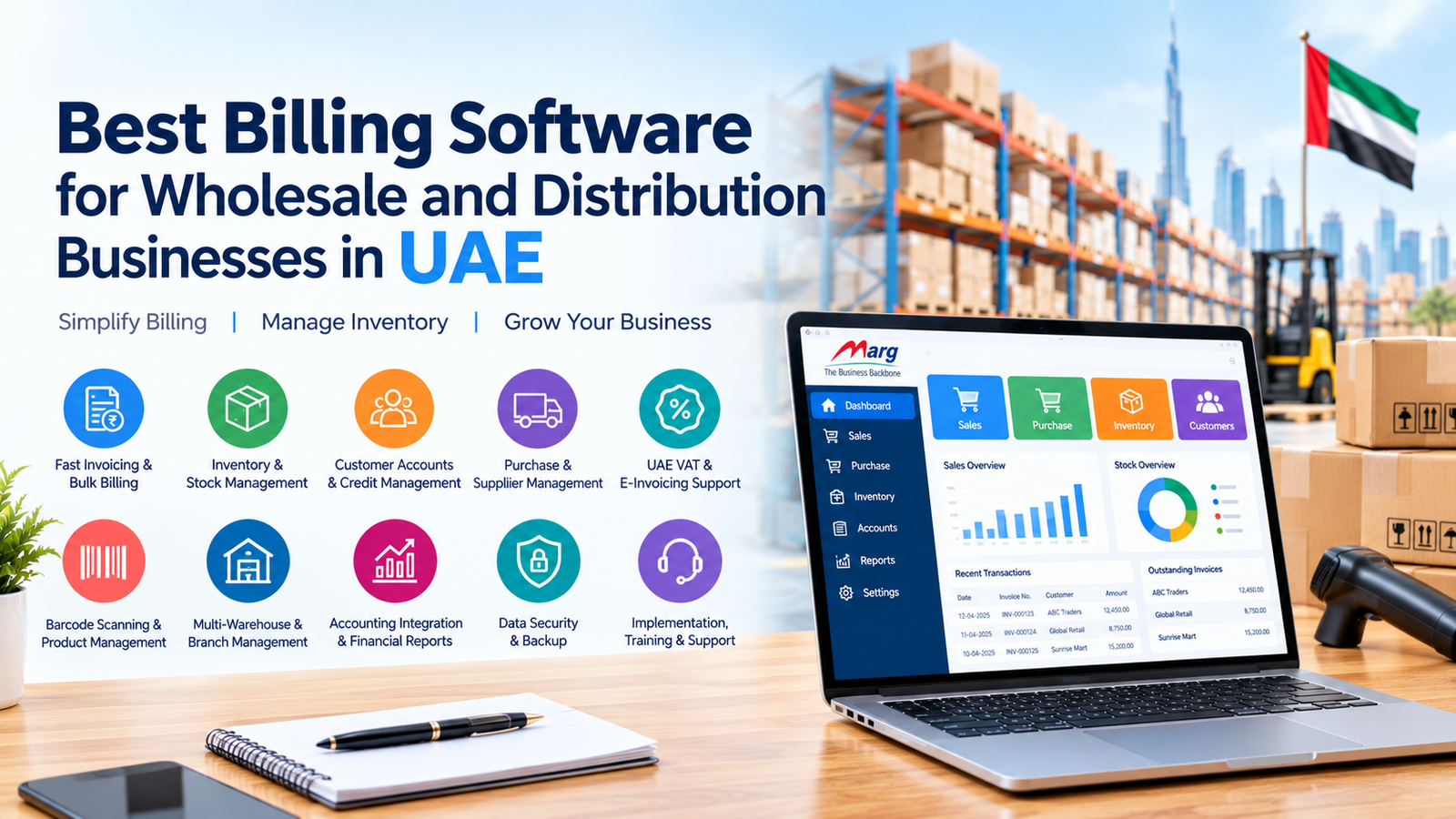
As competition increases, businesses need reliable digital tools to streamline their operations and improve efficiency. This is where choosing the best billing software for wholesale and distribution businesses in UAE becomes important.
The right billing software can help businesses generate invoices faster, maintain accurate sales records, monitor inventory, manage customer accounts, and simplify daily transactions. When billing is integrated with inventory management and accounting, businesses can gain better visibility into their overall operations.
In this guide, we will explore the essential features of wholesale billing software, its benefits for UAE businesses, and how to choose the right solution for your distribution company.
What Is Billing Software for Wholesale and Distribution Businesses?
Billing software is a digital solution that helps businesses create invoices, record sales transactions, manage payments, and maintain billing information. For wholesale and distribution companies, it can also support bulk billing, customer-specific pricing, purchase records, and inventory-related workflows.
Unlike basic invoicing tools, a billing solution designed for wholesale operations may include features that help businesses handle large product catalogues, frequent orders, multiple customers, and high transaction volumes.
For example, a wholesale distributor supplying products to retailers may need to generate invoices for multiple orders, track outstanding customer balances, monitor stock availability, and review sales reports. An integrated billing system can help organize these activities in one place, depending on the features available.
For businesses operating in Dubai, Abu Dhabi, Sharjah, and other parts of the UAE, selecting suitable billing software can support smoother daily operations and better business management.
Why Do Wholesale and Distribution Businesses in UAE Need Billing Software?
Wholesale businesses often handle more transactions and larger order quantities than businesses selling directly to individual customers. Managing these transactions manually can become difficult as the business expands.
Here are some reasons why billing software can be valuable for wholesale and distribution companies.
1. Faster Bulk Billing and Invoice Generation
Wholesale businesses frequently process orders containing multiple products and quantities. Creating invoices manually for every transaction can consume significant time.
Billing software can help employees generate invoices using stored product details, customer information, prices, and applicable tax settings.
This can simplify repetitive billing tasks, improve consistency, and help businesses process customer orders more efficiently.
2. Better Inventory Management
Inventory is one of the most important parts of a wholesale distribution business. Companies must know which products are available, which items need replenishment, and how stock movements affect sales.
Billing software with inventory management capabilities can help businesses update stock records following sales and purchases, monitor available quantities, and review inventory reports.
These capabilities can help reduce stock discrepancies and improve purchasing decisions.
3. Improved Customer Payment Tracking
Wholesale businesses often sell products to retailers and other businesses on credit. Tracking payment due dates, outstanding invoices, and customer balances is essential for maintaining healthy cash flow.
A suitable billing solution can help maintain customer account records, identify overdue invoices, and provide visibility into outstanding payments.
This makes it easier for finance teams to follow up with customers and monitor payment collection activities.
4. More Accurate Sales Records
Manual billing processes can result in duplicate entries, incorrect quantities, calculation mistakes, or incomplete transaction records.
Billing software can standardize invoice creation and maintain organized records of sales transactions.
When configured correctly, the system can help reduce avoidable errors and make it easier to retrieve previous invoices and review transaction histories.
5. Better Business Reporting
Wholesale business owners need to understand sales performance, customer balances, product movement, and purchasing activity.
Billing software with reporting features can help managers review sales summaries, customer-wise transactions, product performance, and outstanding payments.
These insights support more informed decisions about stock replenishment, customer relationships, and business planning.
10 Essential Features to Look for in Wholesale Billing Software in UAE
Before choosing billing software, evaluate whether it supports your business processes and transaction volumes. The following features are particularly useful for wholesale and distribution companies.
1. Bulk Invoicing and Fast Billing
Bulk invoicing is an important requirement for distributors that process numerous orders every day.
Look for software that allows employees to select products, enter quantities, apply approved pricing, and generate invoices efficiently.
Useful capabilities may include:
- Quick product selection
- Automatic calculation of invoice totals
- Customer-specific pricing
- Discounts and approved price adjustments
- Invoice printing and sharing
- Sales return and credit note management
These features can help improve billing efficiency while maintaining consistent transaction records.
2. Inventory and Stock Management
A billing system that integrates with inventory management can help businesses maintain better control over product availability.
Important features may include:
- Stock quantity tracking
- Purchase and sales stock updates
- Warehouse-wise inventory records
- Stock transfer management
- Reorder level alerts
- Product and category reports
- Batch and expiry tracking, where required
For distributors handling large product catalogues, these capabilities can help identify stock shortages, monitor fast-moving products, and support more effective purchasing.
Before purchasing, confirm whether the software supports multiple warehouses and the inventory workflows your business requires.
3. Customer Account and Credit Management
Credit sales are common in many wholesale business models. Without organized records, businesses may struggle to track outstanding payments and customer credit limits.
Choose billing software that can help you maintain customer accounts, review payment histories, monitor receivables, and identify overdue invoices.
If your company provides credit to retailers or other business customers, check whether the system supports customer-specific credit limits, outstanding balance reports, and payment reminders.
These features can help finance teams monitor receivables and follow up on payments more systematically.
4. Purchase and Supplier Management
Wholesale businesses need to purchase products regularly to maintain stock availability.
Billing software integrated with purchasing functions can help businesses manage supplier details, purchase orders, purchase invoices, and supplier payment records.
When purchase and sales information is connected with inventory, businesses can more easily review stock movements and identify replenishment requirements.
Before selecting a system, confirm whether it supports the complete purchasing workflow your company uses.
5. UAE VAT and Tax Invoice Support
Businesses operating in the UAE should evaluate billing software for its ability to support applicable local tax requirements.
Depending on the business, useful capabilities may include configurable VAT rates, relevant tax invoice fields, tax calculations, transaction records, and tax-related reports.
Businesses should verify that the software is appropriately configured for UAE VAT rather than assuming that tax functionality designed for another country will meet local requirements.
It is also important to distinguish ordinary invoicing from the UAE’s electronic invoicing programme. According to the UAE Ministry of Finance, an e-invoice is structured invoice data that can be electronically exchanged and processed. A PDF invoice or an image of an invoice does not, by itself, qualify as an e-invoice under this framework.
If your business falls within the programme’s scope, ask the software provider about its electronic invoicing capabilities, integrations with an accredited service provider, and implementation readiness.
6. Barcode Scanning and Product Management
Distributors handling hundreds or thousands of products can benefit from efficient product identification.
Barcode scanning, where supported, can help employees select products, record quantities, and process transactions more efficiently.
Product management features may also include item codes, units of measurement, product categories, and price lists.
These capabilities can be particularly useful for businesses supplying consumer goods, electronics, building materials, packaged products, and other items with extensive catalogues.
7. Multiple Warehouse and Branch Management
Some wholesale businesses operate several warehouses, retail outlets, or distribution centres.
If your business has multiple locations, look for software that can manage inventory across locations and provide consolidated reporting where required.
Useful capabilities may include branch-wise stock records, inter-warehouse transfers, location-specific transactions, and centralized sales reports.
Confirm whether the software supports the number of locations you operate and whether permissions can be configured for different teams.
8. Accounting Integration and Financial Reports
Billing is closely connected with financial management. When billing and accounting processes are integrated, businesses can maintain more consistent transaction records and improve financial visibility.
Look for features that support customer receivables, supplier payables, payment recording, expense tracking, and relevant financial reports.
Integration can reduce duplicate data entry and make it easier for business owners to review financial performance.
Ask the provider which accounting functions are included and whether the system integrates with your existing accounting tools.
9. Data Security and Backup
Billing records contain important business information, including customer details, prices, transaction histories, and payment records.
Choose software that offers appropriate user permissions, data backup, recovery options, and security controls.
Ask the provider how frequently backups are performed, where data is stored, how access is managed, and what procedures are available if data needs to be restored.
These considerations are important for businesses that depend on billing records for daily operations and financial reporting.
10. Implementation, Training, and Technical Support
Even feature-rich software needs proper implementation to deliver value.
Before selecting a provider, ask about installation, data migration, employee training, customization, and ongoing technical support.
A practical demonstration is also valuable. Ask the provider to show how the software handles your actual business processes, including bulk orders, customer credit, stock updates, invoice generation, and sales reporting.
This helps you assess whether the system fits your workflow before making a purchasing decision.
Benefits of Using Billing Software for Wholesale Businesses
The right billing software can help wholesale and distribution companies organize daily operations and improve productivity.
Reduced Manual Work
Automating routine billing activities can reduce repetitive data entry and allow employees to focus on order processing, customer service, and other important tasks.
Better Stock Visibility
Integrated inventory features can help businesses understand available stock, review product movement, and plan replenishment more effectively.
Improved Cash Flow Monitoring
Customer account records and outstanding invoice reports can help finance teams monitor receivables and follow up on delayed payments.
More Organized Business Records
Digital invoices and searchable transaction histories make it easier to retrieve previous records and review customer or product transactions.
Faster Decision-Making
Sales reports, stock summaries, and customer account information can provide managers with useful insights into business performance.
Support for Business Expansion
As transaction volumes increase, suitable billing software can help businesses maintain organized processes and accommodate additional operational requirements.
Actual results depend on the software’s capabilities, implementation, and how consistently employees use the system.
How to Choose the Best Billing Software for Your Distribution Business in UAE
Choosing the right solution requires more than comparing software prices. Consider the following steps before making a decision.
Step 1: Identify Your Business Requirements
List your most important needs, such as bulk invoicing, stock management, credit sales, purchase management, and financial reporting.
Prioritize essential features instead of selecting software based on a long list of unnecessary functions.
Step 2: Evaluate Your Transaction Volume
Consider the number of invoices you generate, the size of your product catalogue, the number of customers you serve, and the number of employees who need access.
Choose a solution that can handle your current transaction volume and anticipated growth.
Step 3: Verify UAE-Specific Requirements
Confirm that the software can support the applicable UAE tax configuration, invoice requirements, and electronic invoicing obligations relevant to your business.
Request a demonstration of these functions rather than relying only on general marketing statements.
Step 4: Compare Pricing and Additional Costs
Review the complete cost of ownership, including software licences or subscriptions, setup, training, additional users, integrations, support, and maintenance.
A clear quotation helps you compare solutions fairly and plan your investment.
Step 5: Request a Live Demonstration
Ask the provider to demonstrate realistic wholesale transactions, including creating a customer order, checking stock, generating an invoice, recording a payment, and reviewing outstanding balances.
If your company operates multiple warehouses, ask to see the relevant inventory workflows as well.
Step 6: Check Support and Scalability
Confirm the availability of technical assistance, backup and recovery procedures, user training, and future upgrade options.
The right solution should support your present requirements while remaining suitable as your business expands.
Why Consider Marg Software for Wholesale and Distribution Billing?
Wholesale and distribution businesses need software that helps organize billing, inventory, purchasing, customer accounts, and reporting.
Marg Software provides business software solutions with billing and inventory-related capabilities for businesses seeking to manage important operational activities through an integrated system.
Depending on the product configuration and available modules, relevant capabilities may include:
- Fast billing and invoicing: Organize sales transactions and generate invoices efficiently.
- Inventory management: Monitor stock records and support inventory-related workflows.
- Purchase management: Maintain purchasing information and supplier-related records.
- Customer account management: Organize customer transactions and payment information.
- Business reporting: Review sales, purchasing, inventory, and other operational information.
- Data backup options: Evaluate available backup and recovery features for protecting business records.
These functions may be useful for distributors and wholesalers looking to reduce manual work and maintain more organized business processes.
To learn more about Marg’s wholesale and distribution solution, visit the Marg Wholesale and Distribution Software.
You can also explore the Marg Billing Software to review the billing solution.
Important consideration for UAE businesses: Verify the selected product’s UAE-specific VAT configuration, currency support, local implementation services, and electronic invoicing readiness directly with Marg Software. Do not assume that features described for Indian GST requirements automatically satisfy UAE regulations.
Common Billing Software Mistakes Wholesale Businesses Should Avoid
Before investing in a billing solution, avoid these common mistakes.
- Choosing software based only on price: Consider functionality, reliability, support, and long-term costs.
- Ignoring inventory integration: Disconnected billing and stock records can create additional manual work.
- Overlooking credit management: Wholesale businesses should evaluate how customer balances and overdue invoices are tracked.
- Assuming automatic tax compliance: Confirm that the system supports the requirements applicable in the UAE.
- Skipping product demonstrations: Test the software with realistic transactions before purchasing.
- Neglecting employee training: Ensure staff understand how to generate invoices and maintain accurate records.
- Ignoring backup procedures: Understand how business information is protected and recovered.
- Failing to plan for growth: Evaluate whether the system can support more users, products, warehouses, and transactions.
Avoiding these mistakes can help businesses select a solution that better matches their operational needs.
Frequently Asked Questions
1. What is the best billing software for wholesale businesses in UAE?
The best billing software depends on your business size, transaction volume, inventory requirements, and budget. Look for a solution that supports bulk invoicing, inventory management, customer accounts, purchasing, reporting, and applicable UAE tax requirements.
2. Which features are important in wholesale billing software?
Important features include fast invoice generation, product and price management, inventory tracking, customer credit management, purchase records, payment tracking, and sales reporting. Multi-warehouse support may also be important for larger distribution businesses.
3. Can billing software help distributors manage inventory?
Yes. Billing software with integrated inventory capabilities can help record stock movements, update quantities following transactions, monitor stock levels, and generate inventory reports. The available functionality depends on the software and its configuration.
4. Is billing software suitable for small wholesale businesses?
Yes. Small wholesalers can use billing software to organize invoices, maintain customer records, track stock, and monitor outstanding payments. The most suitable solution is one that meets their current requirements without unnecessary complexity or expense.
5. Can billing software manage customer credit and outstanding payments?
Some billing systems include customer account management, receivables reports, payment tracking, and credit control features. Businesses should confirm which features are available and whether customer-specific credit limits and payment reminders are supported.
6. What should UAE businesses check before buying billing software?
Businesses should verify invoice functionality, UAE VAT configuration, applicable electronic invoicing requirements, currency support, inventory features, data security, implementation services, and customer support.
7. What is the difference between billing software and wholesale distribution software?
Billing software primarily focuses on creating invoices and recording transactions. Wholesale distribution software may offer broader capabilities, including inventory management, purchasing, customer credit, warehouse operations, sales reporting, and accounting integration.
8. Does billing software automatically make a business compliant with UAE e-invoicing requirements?
No. Standard invoice generation alone does not guarantee compliance with the UAE electronic invoicing framework. Businesses should confirm whether their software supports the required structured electronic invoice format, applicable integrations, and other obligations relevant to their circumstances.
For official guidance, refer to the UAE Ministry of Finance eInvoicing portal.
Conclusion
Choosing the best billing software for wholesale and distribution businesses in UAE can help companies improve invoicing efficiency, organize inventory records, monitor customer payments, and gain better visibility into daily operations.
Before making a decision, evaluate your business requirements, compare available features, verify UAE-specific tax and electronic invoicing requirements, and request a demonstration of the workflows your team uses every day.
For wholesalers and distributors looking to improve billing and inventory management, Marg Software offers solutions worth evaluating against these requirements.
Explore the Marg Wholesale and Distribution Software or the Marg Billing Software to learn more about the available options and enquire about a suitable solution for your business.